Summary
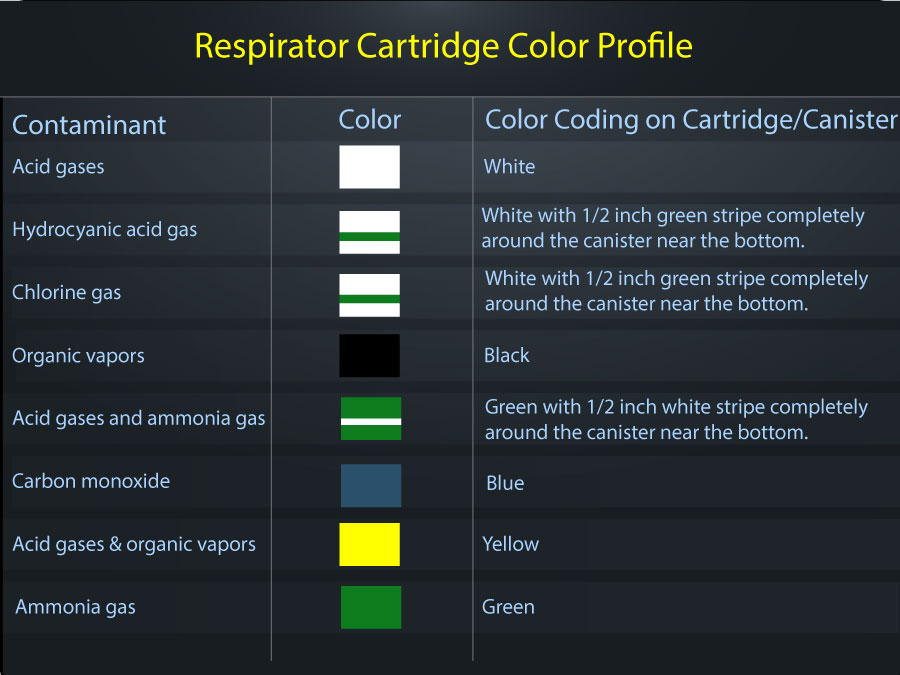
The National Institute for Occupational Safety and Health (NIOSH) has established a color-coding system for respirator cartridges and filters to indicate the type of protection they provide. In HAZWOPER (Hazardous Waste Operations and Emergency Response), selecting the correct respirator cartridge or filter is crucial for protection against hazardous airborne contaminants. The type of cartridge(s) is a required topic for HAZWOPER training. Specifically, the 40 hour HAZWOPER, 24 hour HAZWOPER and associated HAZWOPER refresher require a module on NIOSH.
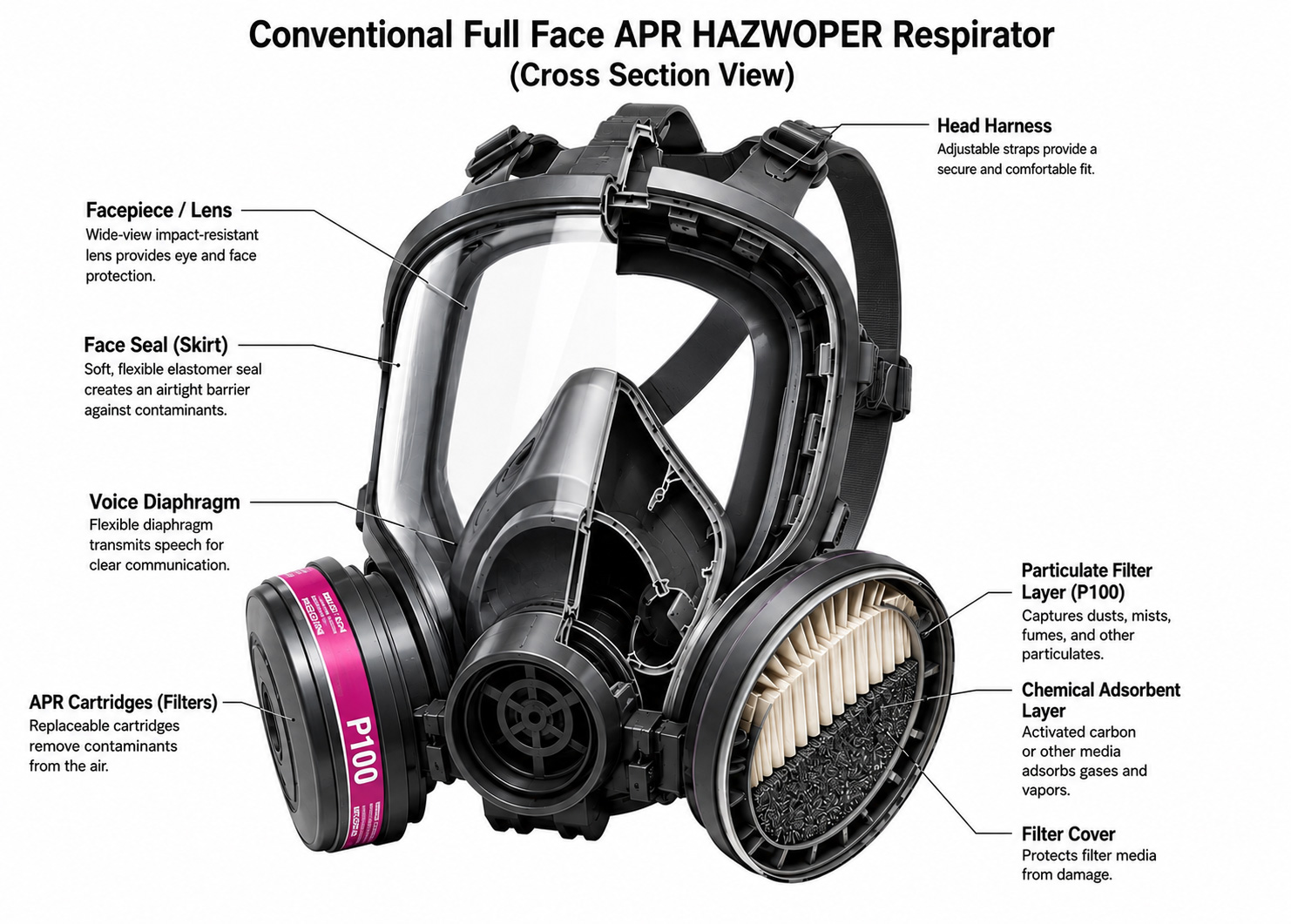
Conventional APR Respirators
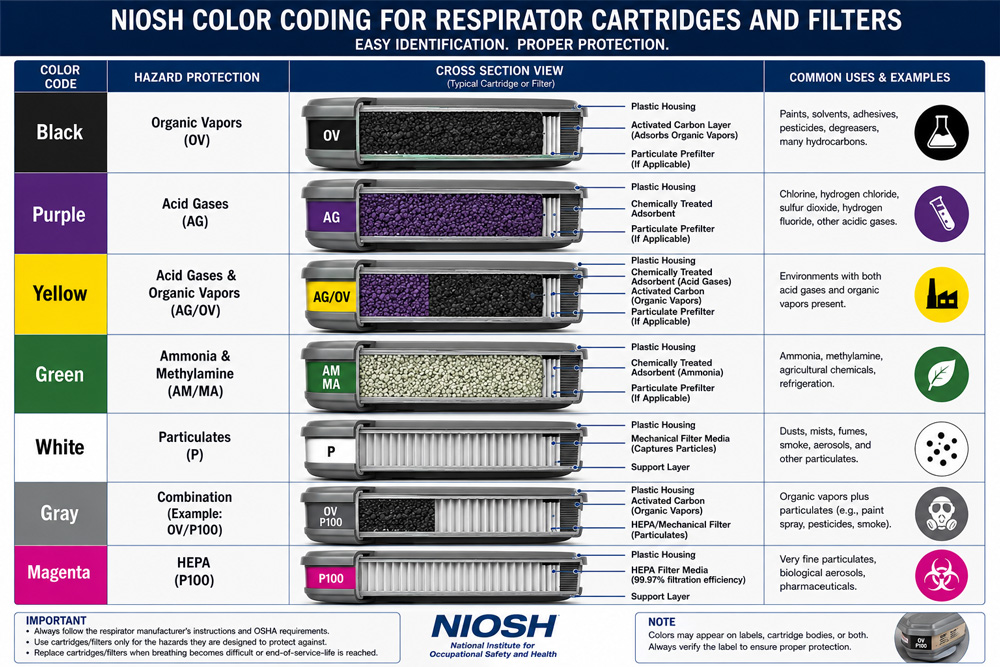
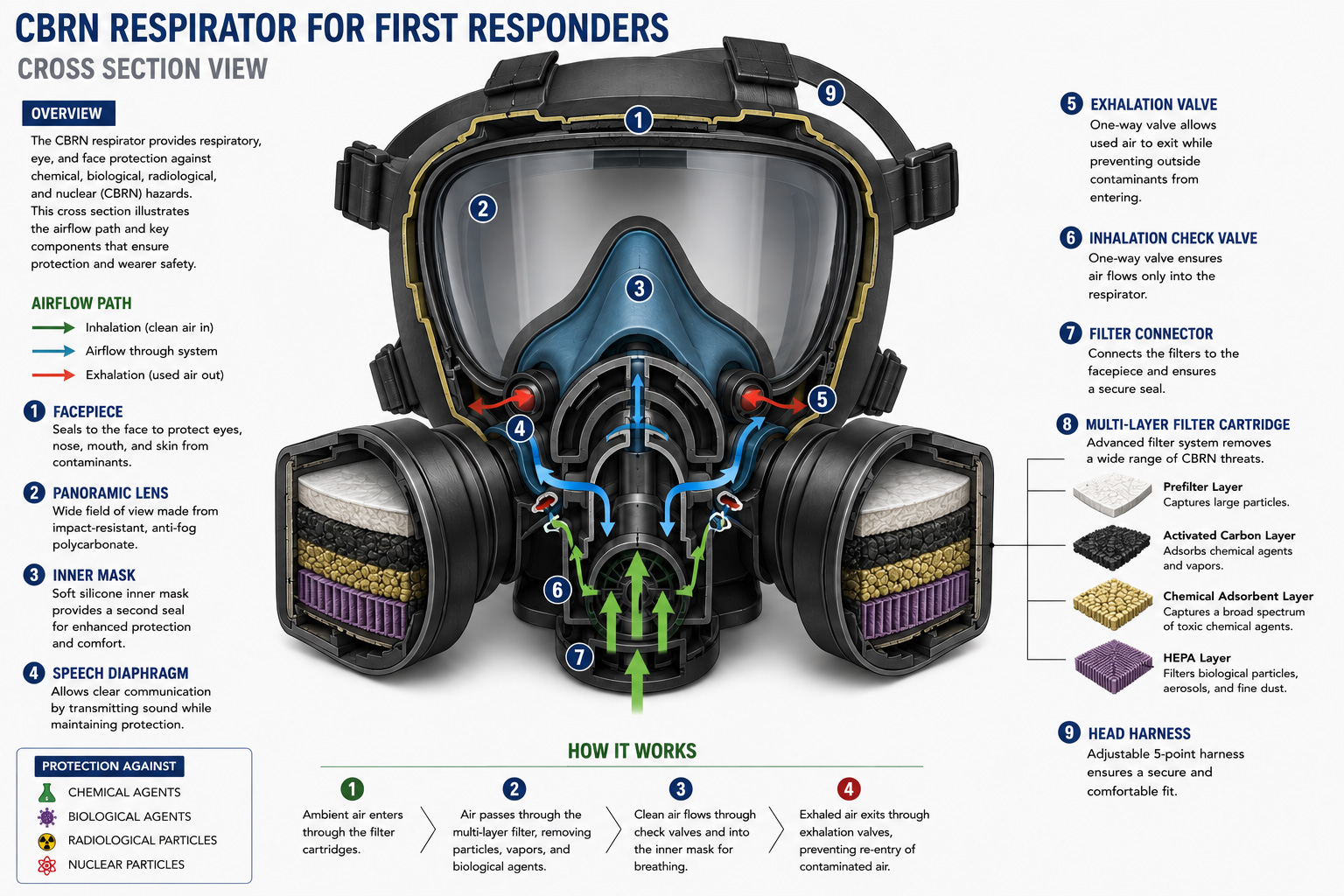
CBRN APR Respirators
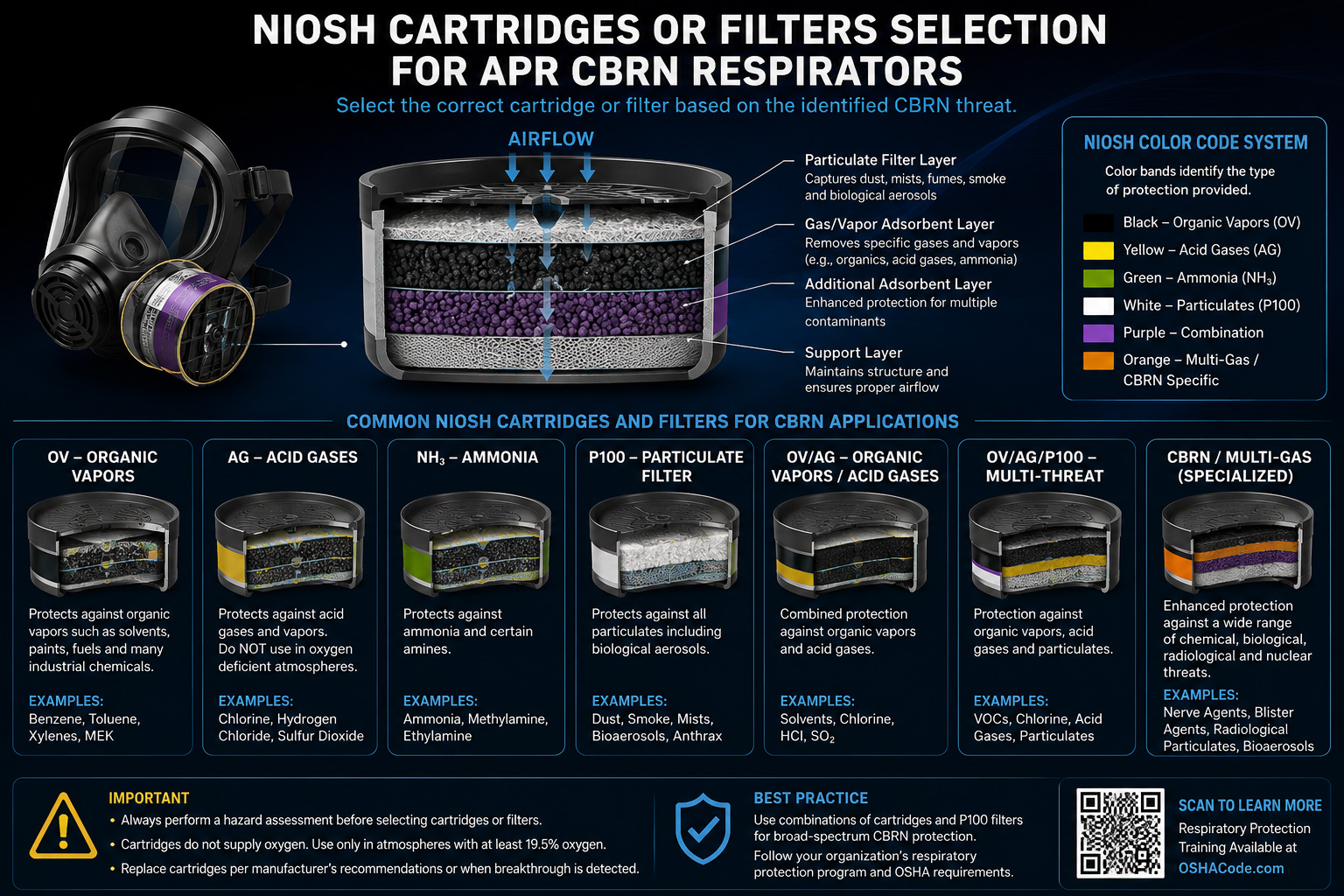
NIOSH Respirator Color Code Quick Reference
| Color | Protection Against | Typical Cartridge | Common HAZWOPER Uses |
|---|---|---|---|
| Black | Organic Vapors | OV | Paints, solvents, fuels, pesticides, degreasers. |
| White | Acid Gases | AG | Chlorine, sulfur dioxide, hydrogen chloride. |
| Yellow | Organic Vapors + Acid Gases | OV/AG | Mixed chemical environments. |
| Green | Ammonia / Methylamine | AM/MA | Ammonia refrigeration systems. |
| Olive | Multi-Gas / Vapor | Multi-Gas | Mixed chemical hazards. |
| Magenta (Pink/Purple) | P100 Particulate Filter | P100 | Lead, asbestos, silica, toxic dusts. |
Which Respirator Uses These Cartridges?
| Respirator | Uses NIOSH Color-Coded Cartridges? | Typical HAZWOPER PPE Level | Can Be Used in IDLH? |
|---|---|---|---|
| Half-Face APR | Yes | Level C | No |
| Full-Face APR | Yes | Level C | No |
| PAPR | Yes | Level C | No |
| SCBA | No | Levels A & B | Yes |
| Supplied-Air Respirator (SAR) | No | Levels A & B (with escape SCBA where required) | Yes (when configured appropriately) |
Important: OSHA requires employers to ensure that all respirator filters, cartridges, and canisters are properly labeled and color coded with the NIOSH approval label and that the label remains legible while in use. Color coding is a secondary identification aid and should always be used together with the NIOSH approval label, cartridge markings, the hazard assessment, and the manufacturer's instructions.
Full Face Air Purifying Respirator (APR)
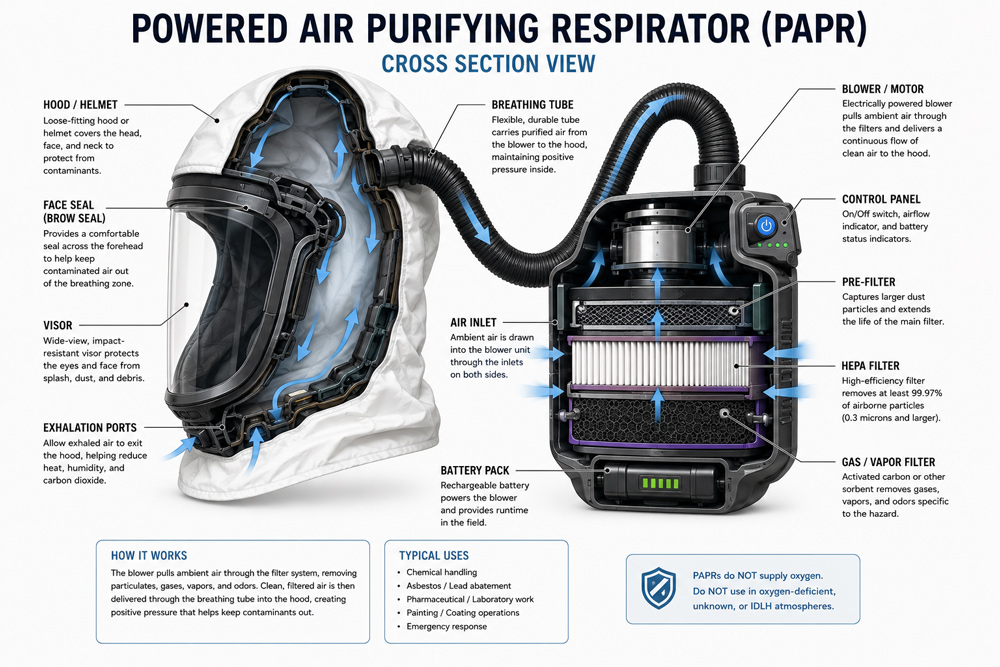
Powered Air Purifying Respirator (PAPR)
CBRN Full Face Air Purifying Respirator (APR)
1. What are NIOSH Color Bands on Respirators?
The NIOSH color bands are used on air-purifying respirator (APR) cartridges and filters to visually identify the type of contaminants they are designed to protect against. Each color corresponds to a specific hazard class, such as organic vapors, acid gases, ammonia, or particulates.
Why the Color Bands Matter:
- Ensures workers use the right cartridge/filter for the hazard.
- Prevents accidental exposure to toxic gases or particulates.
- Makes it easier to identify correct replacement cartridges.
2. NIOSH Color Codes for Respirator Cartridges & Filters
| Color | Protection Against | Examples of Contaminants | Cartridge Type |
|---|---|---|---|
| Black | Organic Vapors | Benzene, toluene, xylene, paint fumes, pesticides | Organic Vapor (OV) |
| White | Acid Gases | Chlorine, sulfur dioxide, hydrogen chloride | Acid Gas (AG) |
| Yellow | Organic Vapors & Acid Gases | Paint thinners, pesticides, chlorine, ammonia | Organic Vapor/Acid Gas (OV/AG) |
| Green | Ammonia & Methylamine | Ammonia, fertilizers, refrigeration chemicals | Ammonia/Methylamine (AM/MA) |
| Olive | Multiple Chemical Gases & Vapors | A combination of organic vapors, acid gases, ammonia, and other contaminants | Multi-Gas/Vapor |
| Magenta (Pink) | HEPA (High-Efficiency Particulate Air) Filter | Asbestos, lead dust, silica, biohazards, radioactive materials | P100 |
| Blue | Carbon Monoxide (CO) | Carbon monoxide; continuous monitoring is required | CO (Carbon Monoxide) |
| Brown | Specific Industrial Gases | Hydrogen fluoride and certain chemical-processing gases | HF (Hydrogen Fluoride) |
| Orange | Mercury Vapors & Chlorine Gas | Mercury vapor, chlorine | Mercury Vapor/Chlorine Gas (Hg/Cl) |
Important: Color coding is only an identification aid. Always verify the full NIOSH approval label, contaminant limitations, assigned protection factor, cartridge service-life requirements, and manufacturer instructions before selecting or using a respirator cartridge or filter. Air-purifying respirators must not be used in oxygen-deficient, unknown, or IDLH atmospheres.
3. Particulate Filters and Their Color Codes
In addition to gas/vapor cartridges, some respirators require particulate filters to protect against dusts, mists, fumes, and biological hazards.
| Filter Type | NIOSH Rating | Protection Against |
|---|---|---|
| N95 (White or No Color Band) | 95% efficient, Not resistant to oil | Dusts, biological agents (e.g., TB, flu) |
| R95 (White or No Color Band) | 95% efficient, Somewhat resistant to oil | Dusts, mists, certain oil-based particulates |
| P95 (White or No Color Band) | 95% efficient, Strongly resistant to oil | Oil-based & non-oil particulates |
| P100 (Magenta/Pink) | 99.97% efficient, Strongly resistant to oil | Lead, asbestos, silica, biohazards, highly toxic particulates |
4. Selecting the Right Cartridge for HAZWOPER Work
How to Choose the Right Filter/Cartridge:
- Identify the Hazard
- Conduct air monitoring to determine if you are dealing with organic vapors, acid gases, particulates, or a combination.
- Match the Hazard to the Correct NIOSH Color Band
- Example: If working with benzene or paint thinners, choose a black (Organic Vapor) cartridge.
- Consider Particulate Exposure
- If dust or mist exposure is present, use a P100 filter (magenta) in combination with the gas cartridge.
- Check NIOSH Approval & Expiration Dates
- Cartridges and filters degrade over time, so follow replacement schedules based on breakthrough times.
- Fit Test & Seal Check
- Half-face and full-face respirators require an annual fit test and a seal check before each use.
5. HAZWOPER Applications & Examples
| HAZWOPER Task | Common Hazards | Recommended Respirator & Filter |
|---|---|---|
| Chemical Spill Cleanup | Organic solvents (benzene, toluene), acid gases | Organic Vapor/Acid Gas (OV/AG) cartridge (Yellow) with a P100 (Magenta) filter when airborne particulates are present. |
| Pesticide Handling | Organic vapors and pesticide aerosols | Organic Vapor (OV) cartridge (Black) combined with a P100 (Magenta) particulate filter. |
| Confined Space Entry | Hydrogen sulfide (H₂S), oxygen deficiency, unknown atmospheres | Pressure-Demand SCBA or Supplied-Air Respirator (SAR) with an escape bottle when required. Air-purifying respirators should not be used in IDLH or oxygen-deficient atmospheres. |
| Lead & Asbestos Removal | Lead dust, asbestos fibers, airborne particulates | P100 (Magenta) particulate filter used with an approved air-purifying respirator or powered air-purifying respirator, depending on the hazard assessment. |
| Ammonia Refrigeration Work | Ammonia gas | Ammonia/Methylamine (AM/MA) cartridge (Green) when atmospheric conditions are known and oxygen levels are adequate. |
Important: Respirator and cartridge selection must always be based on a documented hazard assessment, contaminant identification, atmospheric monitoring, oxygen concentration, and the requirements of your respiratory protection program. Air-purifying respirators should never be used in oxygen-deficient, unknown, or Immediately Dangerous to Life or Health (IDLH) atmospheres. In these situations, a pressure-demand Self-Contained Breathing Apparatus (SCBA) or other approved atmosphere-supplying respirator is required.
6. Key Takeaways
- NIOSH color bands help workers quickly identify the right respirator cartridges for the hazard.
- Combination cartridges (e.g., yellow for OV/AG) provide protection against multiple hazards.
- P100 filters (Magenta) should be used for toxic dusts like lead and asbestos.
- Cartridges have limited service life—follow replacement guidelines based on contaminant concentration and exposure duration.
- Fit testing & seal checks are essential for proper protection.
Frequently Asked Questions
What does a black respirator cartridge protect against?
A black cartridge is commonly used to identify protection against organic vapors, such as certain solvents, paints, fuels, and degreasing chemicals. It does not automatically protect against every organic vapor or against unknown, oxygen-deficient, or IDLH atmospheres. Cartridge selection must be based on the specific contaminant, concentration, respirator approval, and manufacturer instructions.
What does a white respirator cartridge protect against?
A white cartridge or canister is commonly associated with acid gases, such as chlorine, sulfur dioxide, and hydrogen chloride. Workers should verify the specific contaminants listed on the cartridge label and approval documentation before use because not every acid-gas cartridge is approved for every chemical or concentration.
What does a yellow respirator cartridge protect against?
A yellow cartridge is commonly used for combined organic vapor and acid gas protection. It may be used where both contaminant categories are present, but users must confirm that the specific cartridge is approved for the actual chemicals and exposure conditions at the site.
What does a green respirator cartridge protect against?
A green cartridge is commonly used for ammonia and methylamine protection. It should be selected only when the respirator program’s hazard assessment identifies ammonia, methylamine, or another contaminant specifically covered by that cartridge’s approval and manufacturer instructions.
What does an olive respirator cartridge protect against?
An olive cartridge or canister is commonly used to identify protection against multiple gases and vapors. Depending on the approved configuration, it may cover combinations of organic vapors, acid gases, ammonia, formaldehyde, and other listed contaminants. “Multi-gas” does not mean protection against every airborne hazard, unknown atmosphere, or oxygen-deficient environment.
What does a magenta or pink respirator filter mean?
Magenta, often described as pink or purple, identifies a high-efficiency particulate air filter. In many workplace respirator configurations, this is a P100 particulate filter. It protects against certain particulates such as dusts, mists, fumes, and other aerosols when the approved respirator is selected and used correctly. It does not protect against gases or vapors unless it is combined with an appropriate gas or vapor cartridge. NIOSH lists P100 filters as filtering at least 99.97% of applicable airborne particles and as strongly resistant to oil.
Does a P100 filter protect against chemical vapors?
No. A P100 filter is designed for particulates, not chemical gases or vapors. If the work environment contains both particulates and chemical vapors, the respirator may require an approved combination cartridge and particulate filter assembly selected for all identified hazards.
What do N, R, and P mean on particulate filters?
The letter identifies the filter’s resistance to oil-based aerosols: N means not resistant to oil, R means somewhat resistant to oil, and P means strongly resistant to oil. The number—95, 99, or 100—identifies the minimum particulate filtration efficiency class. These ratings apply to particulate filters and do not identify protection against gases or vapors.
Can respirator cartridge colors be used as the only selection method?
No. Color coding is only a secondary identification method. Employers must evaluate the contaminant, concentration, physical form, oxygen level, exposure duration, warning properties, work rate, respirator protection factor, cartridge approval, and manufacturer limitations. A color band alone cannot establish that a cartridge is appropriate.
Can an air-purifying respirator be used in an oxygen-deficient or unknown atmosphere?
No. Air-purifying respirators do not supply oxygen and should not be used in oxygen-deficient, unknown, or immediately dangerous to life or health atmospheres. Those conditions generally require an appropriate atmosphere-supplying respirator, such as a pressure-demand SCBA or supplied-air respirator with an auxiliary self-contained air supply, selected under the respiratory-protection program.
Do workers need fit testing before using a cartridge respirator?
Yes, when a tight-fitting respirator is required for protection. OSHA requires fit testing for employees using tight-fitting facepiece respirators, and the employer must also provide a medical evaluation, training, maintenance, and a written respiratory-protection program.
How often should respirator cartridges be changed?
Cartridges must be replaced according to the employer’s cartridge change schedule, manufacturer instructions, and the conditions of use. OSHA explains that a change schedule must specify how often cartridges are replaced and the information used to establish that interval. Cartridge service life can be affected by contaminant concentration, humidity, temperature, breathing rate, cartridge capacity, and workplace conditions.
Can workers wait until they smell a chemical before changing a cartridge?
No. Odor is not a reliable cartridge change-out method for every chemical or worker. Some contaminants have poor warning properties, and odor detection can vary by individual, concentration, fatigue, illness, and cartridge condition. A documented change schedule or an approved end-of-service-life indicator should be used when required by the respiratory-protection program.
Are all respirator cartridges interchangeable between brands?
No. Cartridges, filters, facepieces, adapters, and other components must be used only in the NIOSH-approved configuration specified by the manufacturer. A cartridge that physically attaches to another brand’s respirator is not necessarily approved or safe for use with that facepiece.
Do cartridge color codes apply to all respirators worldwide?
No. The color-coding system discussed on this page applies to the U.S. NIOSH/ANSI framework. Other countries and standards may use different color systems, symbols, classifications, and approval requirements.
Choose the Right Respirator Cartridge Before You Enter the Hazard Zone
Selecting the correct respirator cartridge or filter is just as important as choosing the right respirator. NIOSH color coding provides a quick visual reference, but color alone is never enough. Workers and employers must verify the cartridge label, understand the contaminant, review air-monitoring results, evaluate oxygen levels, and follow the manufacturer’s change-out schedule before relying on any air-purifying respirator.
OSHACode® HAZWOPER training teaches workers how to identify respiratory hazards, interpret NIOSH cartridge color codes, understand the limitations of APRs and PAPRs, and recognize when atmosphere-supplying respirators such as SCBAs or SARs are required. Employers then reinforce that knowledge through site-specific training using the actual respirators, cartridges, monitoring instruments, and work procedures found at the job site.
Build the knowledge to select the right respirator, the right cartridge, and the right level of protection before every HAZWOPER operation.
Sources
Emergency Response and Preparedness
OSHA HAZWOPER Hands-on Training Requirement
Medical Surveillance Requirements
National Institute for Occupational Safety and Health (NIOSH)
National Personal Protective Technology Laboratory
U.S. Occupational Safety and Health Administration
https://www.osha.gov/laws-regs/standardinterpretations/1992-08-27-1
U.S. Environmental Protection Agency
https://www.epa.gov/laws-regulations/summary-resource-conservation-and-recovery-act
Related Articles
Building a HAZWOPER Safety Culture
HAZWOPER Hands-on Training Discussions with U.S. OSHA
About the Author
This article was written by Clay A. Bednarz, MS, RPIH, founder of National Environmental Trainers® and OSHACode®. Bednarz pioneered the first commercial online HAZWOPER training programs in 1998 and has supported major hazardous waste operations, environmental remediation projects, and emergency response training initiatives nationwide.